Just a few days ago, the New York Times ran an extraordinary article about the Vietnam War.
In
it were facts that have only recently come to light and illustrate
exactly how frustrated the American military and political leadership
were with the war and each other.
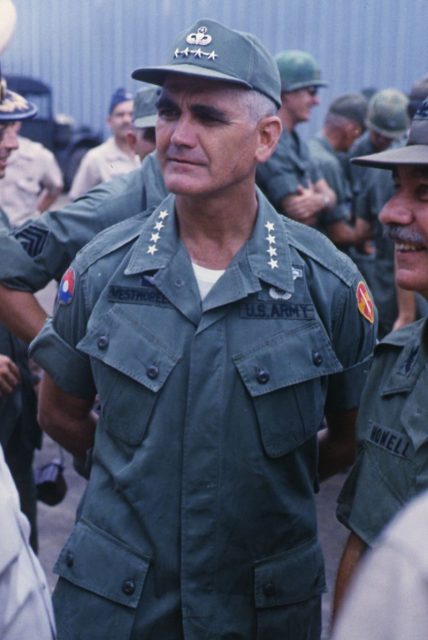
This news was that General
William Westmoreland, overall American military commander in Vietnam
from 1968-1972, activated a plan to move and potentially use nuclear
weapons against the North Vietnamese.
Recently
declassified documents show that Westmoreland was increasingly nervous
about the outcome of the siege of Khe Sanh, one of the biggest and
longest battles of America’s involvement in Vietnam.
In the end
the engagement, which lasted from January to June 1968, proved
indecisive. The Vietnamese communists failed to dislodge the Americans
from their strategic base, and US forces withdrew from the area
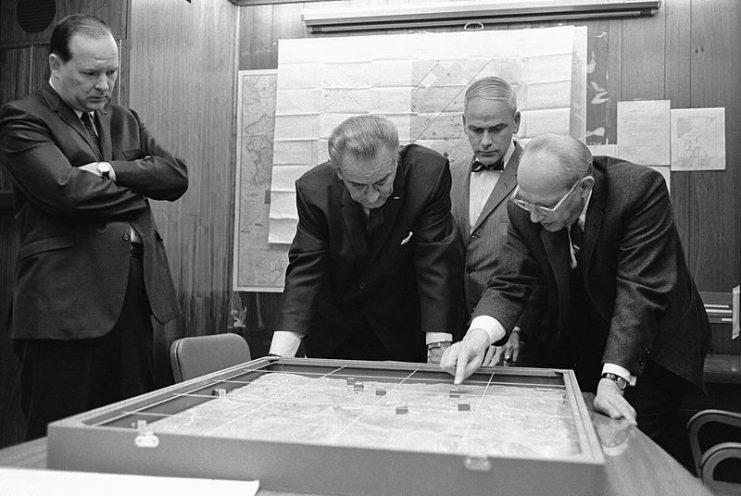
voluntarily after the siege had been lifted. National Security Advisor Walt W. Rostow showing President Lyndon B. Johnson a model of the Khe Sanh area, 15 February 1968In
many ways, Khe Sanh was the Vietnam War in a nutshell: the US inflicted
dire losses on the North Vietnamese and their Viet Cong allies, and the
Vietnamese were able to engage the Americans in a long prolonged
conflict with no clear ending.
Sanh, especially its conclusion,
sapped already poor American support for the war at home, and crushed
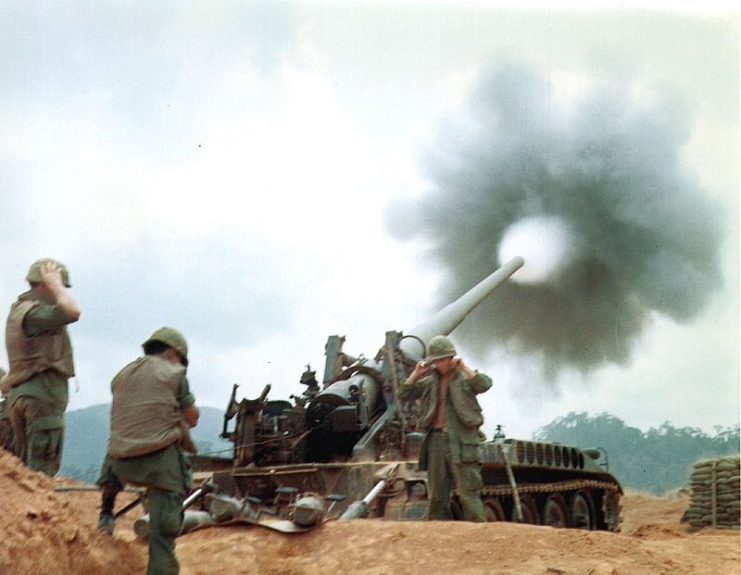
American morale in the field. An Army 175-mm M107 at Camp Carroll provides fire support for ground forces.At
the time Westmoreland began to act on his ideas, however, the siege was
still going on, and not going well for the United States.
People
all over the world were comparing Khe Sanh to the French defeat in North
Vietnam at Dien Bien Phu in 1954, which essentially put an end to
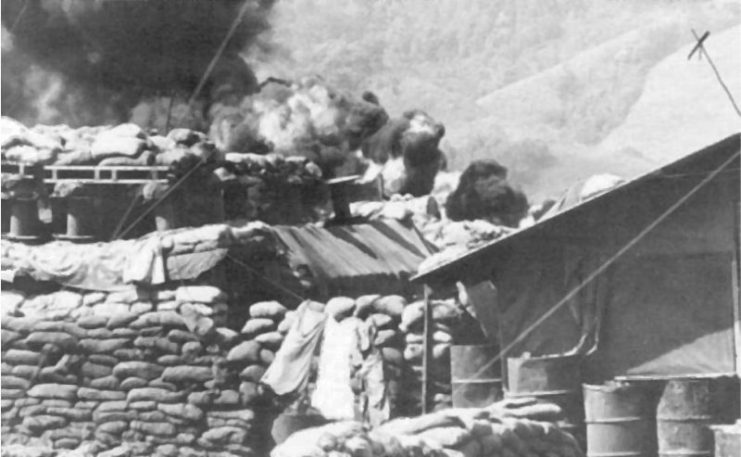
French rule in Southeast Asia. A burning fuel dump after a mortar attack at Khe SanhKhe
Sanh began nine days before the North Vietnamese/Viet Cong Tet
Offensive, which signaled to many in the West that the Vietnamese War
was lost, despite victory on the field. As the siege at Khe Sanh went
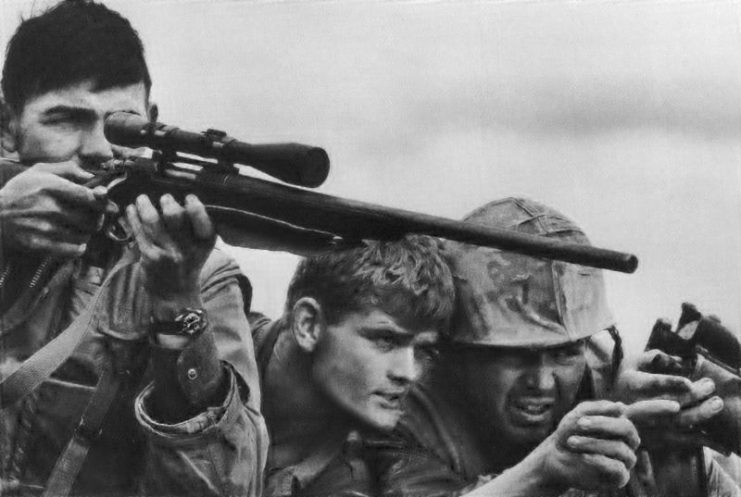
on, that feeling only grew. Marine Corps sniper team searches for targets in the Khe Sanh ValleyWestmoreland
and the Johnson Administration were worried that a clear North
Vietnamese victory at Khe Sanh would put yet another nail in the coffin
of American involvement in Southeast Asia, and would cause even greater
protest against the war in the United States.
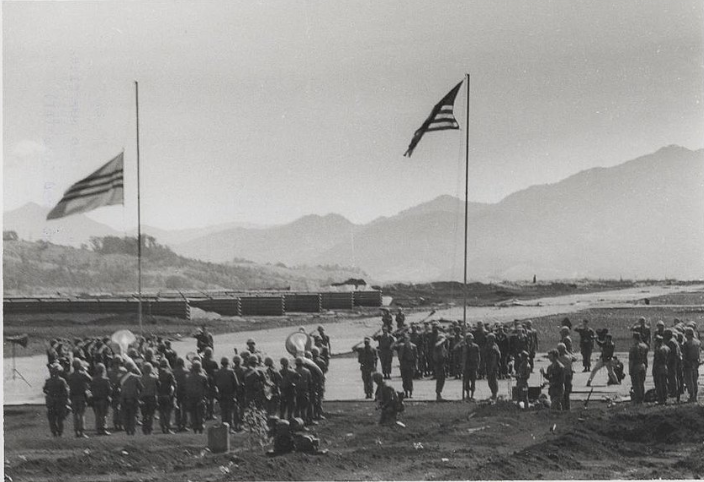
To that end, Westmoreland put in place a contingency plan – one that Johnson did not know about. 3/4 Marines memorial service at Khe Sanh Combat BaseNamed
“Operation Fracture Jaw,” the plan called for the movement of nuclear
weapons from American bases in the Pacific and the United States to
Vietnam in case of defeat at Khe Sanh.
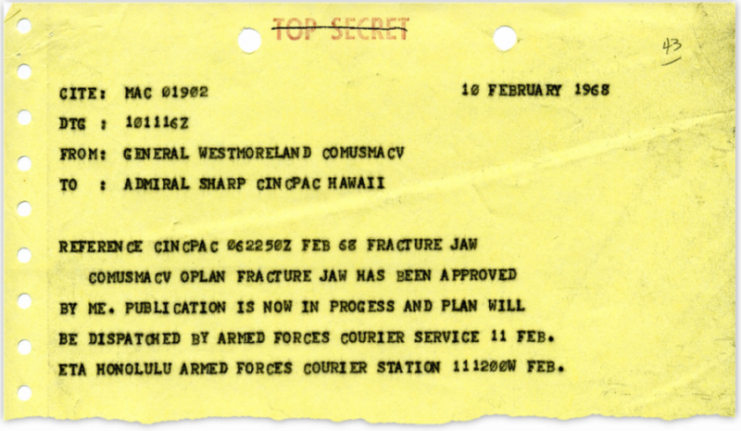
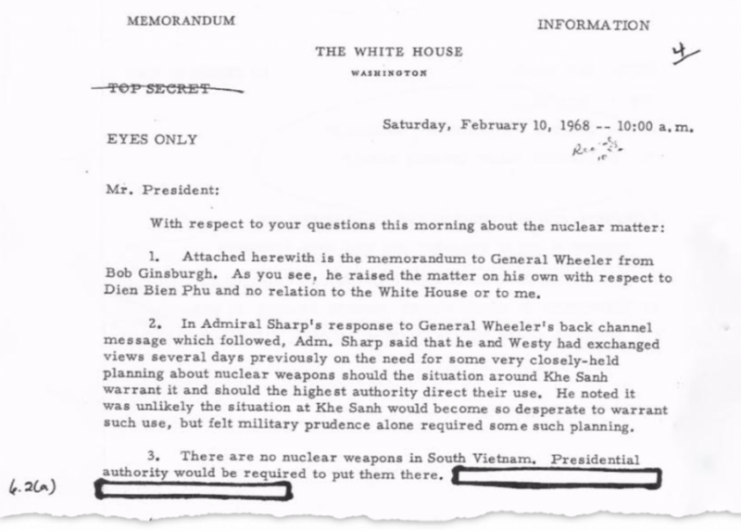
On February 10, 1968,
Westmoreland communicated with Admiral Sharp, Commander in Chief,
Pacific and told him that “Oplan Fracture Jaw has been approved by me.” Fracture Jaw operationWestmoreland
also communicated with other generals, such as General Earle Wheeler,
the Chairman of the Joint Chiefs of Staff, and they discussed
implementing “Fracture Jaw” as soon as possible, if circumstances
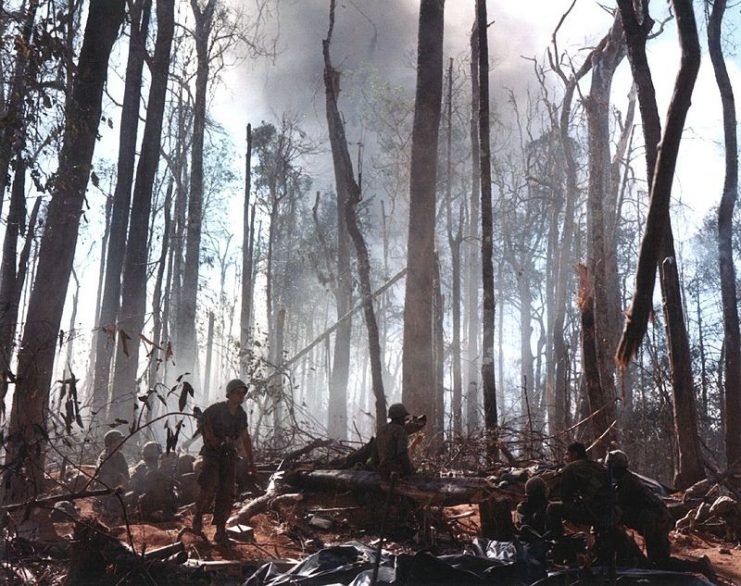
warranted. Combat on Hill 875, the most intense of the battles around Dak To.As
often happens in Washington, there was a leak, and the National
Security adviser to President Johnson found out about the “Fracture Jaw”
discussions. Of course, he notified Lyndon Johnson right away. Note from white house Fracture JawJohnson
had grown exceedingly suspicious of the military as the Vietnam War
went on, and with good reasons. Among them were the constant promises of
victory, followed by requests for billions of more dollars to win the
war.
When Johnson found out about “Fracture Jaw” he was furious,
and immediately issued an order to Westmoreland that left no room for
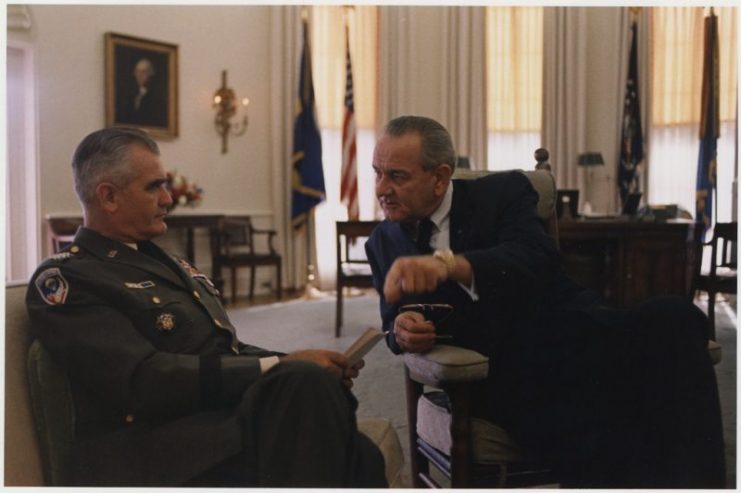
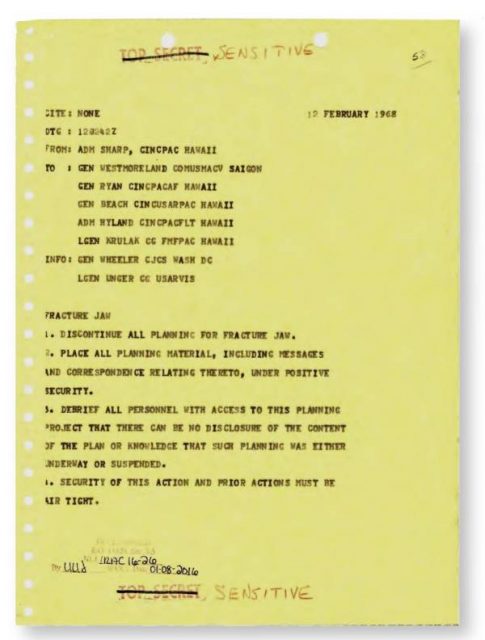
misunderstanding. General Westmoreland with Lyndon B. Johnson in the White House, November 1967.“Discontinue
all planning for Fracture Jaw”, read the first point of Johnson’s cable
to the general. The other three points stressed the importance of
secrecy regarding this incident and all planning of this type:
“Debrief
all personnel with access to this planning project that there can be no
disclosure of the content of the plan or knowledge that such planning
was either underway or suspended” and “Security of this action and prior
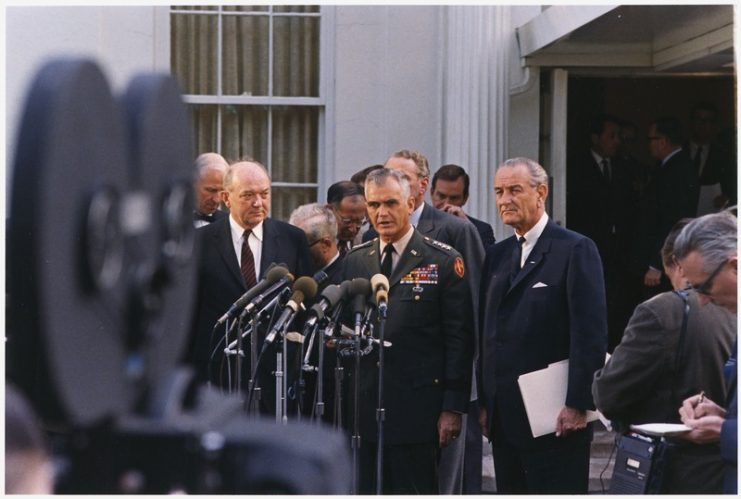
activity must be air tight [sic].” Discontinue Fracture JawThat was the last anyone heard of “Fracture Jaw” until these documents were recently declassified. Press
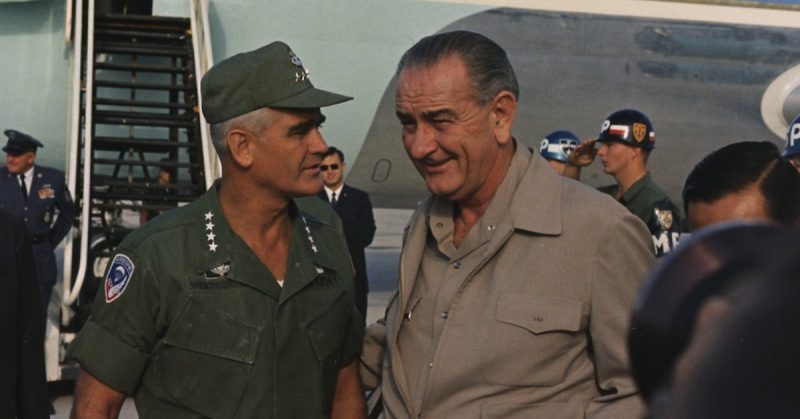
conference outside the White House in April 1968.Secretary of State
Dean Rusk, General William Westmoreland, President Lyndon B. Johnson,
others in background.Before the Cold War ended,
many Americans wondered why the Soviet Union and China prepared for an
American first nuclear strike. They told themselves, “We’re not the
aggressive ones.
If anyone starts a nuclear war, it will be the
Communists.” Unfortunately, both sides had reasons to be suspicious of
each other, and looking at the situation solely from the Soviets’
perspective, history would seem to bear out their idea that the
Americans might strike first with nuclear weapons.
The United
States is the only nation to ever use nuclear weapons in war. The
Hiroshima and Nagasaki bombs put an end to World War II.
The point here is not whether the US was justified in their use or not, but that America had–and used–nukes first. Westmoreland in Vietnam.After
three years and thousands of deaths in Korea, incoming US President
Dwight D. Eisenhower used the veiled threat of American nuclear attack
to bring the Communists to the negotiating table.
In 1962, John
Kennedy went on television to let the American public, and incidentally
the Soviets, know that any strike coming from Cuba against the United
States would be considered an attack by the USSR on the USA.
We
learned much later that the Cubans, much to the Soviets’ chagrin, were
prepared to take over Soviet tactical nuclear weapons in Cuba to repel
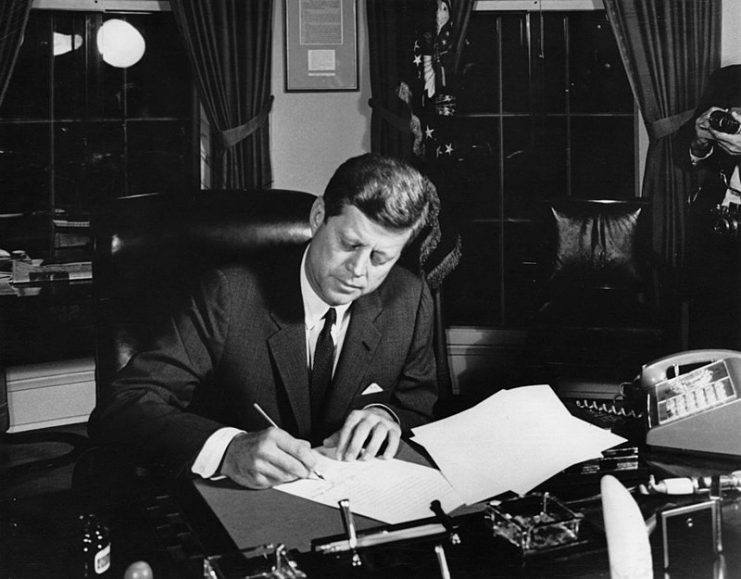
an American invasion. October 23, 1962: President Kennedy signs Proclamation 3504, authorizing the naval quarantine of Cuba.
In
1981, President-elect Ronald Reagan let it be known by back-channels
that he would consider using nuclear weapons to end the Iran Hostage
Crisis. On the day Reagan took office, the hostages were released.
The
release of the “Fracture Jaw” information has already been blared in
headlines in the Russia Times this week, as the new “Cold War”
continues.




No comments:
Post a Comment