World
War II has been captured on film by Hollywood, written about in both
fictional and factual books, and caught in newsreel footage at the time.
Nevertheless, half-baked stories and flat-out lies about it to
persist to this day. It’s hard to say why, but perhaps when tales have a
glimmer of truth in their origins, it’s just too tempting for some
people to avoid inflating them.
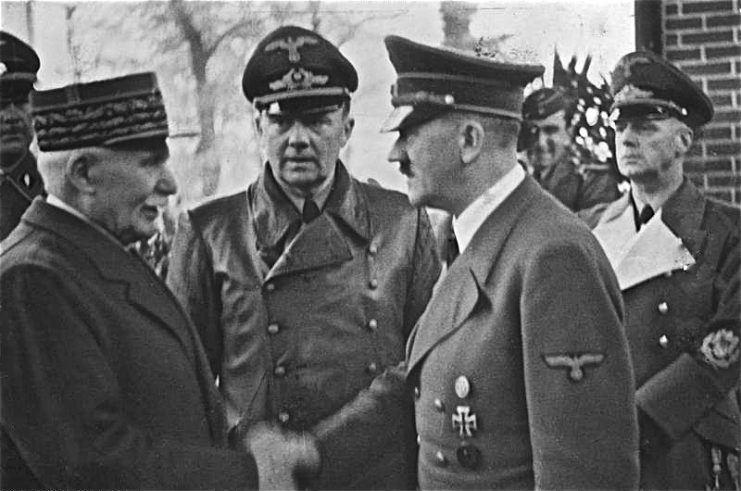
For example, some people still think that France essentially rolled
out the red carpet for Hitler instead of fighting German occupation
tooth and nail. Even more ludicrous, some believe that Hitler danced a
little jig when he heard this news. However, the truth is: no they
didn’t, and he definitely did not.
France put up quite a struggle, but it was still reeling from World
War I, which goes some way to explaining why it took Germany only six
weeks to secure its surrender.
As for Hitler dancing at the news, he was indeed shocked that it took
relatively little time to take the country over, and was caught on film
stepping back when he heard the news. But dancing? No. It would be
insulting to French people everywhere to repeat these two stories as
fact. Chief
of collaborationist French State Marshal Pétain shaking hands with
German Nazi leader Hitler at Montoire on October 24, 1940.Photo:
Bundesarchiv, Bild 183-H25217 / CC-BY-SA 3.0
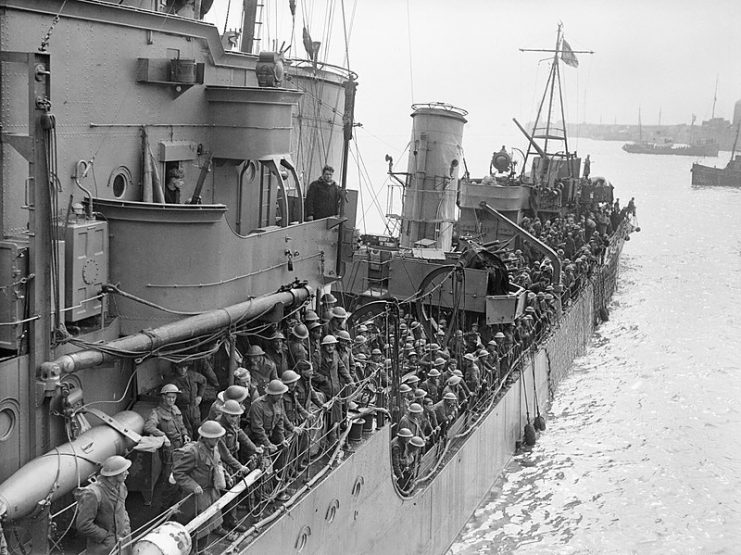
The evacuation of Dunkirk and the circumstances leading up to this
event have been repeatedly recreated on film. Remarkably, some people
still credit Hitler with ordering his men to take a breather, letting
them rest in a kind of salute to Britain and Churchill.
It’s true that German troops were resting and regrouping during the
evacuation, but this was at the instruction of an anonymous German
general, not because Hitler was showing respect to the English soldiers.
The fact that the Germans didn’t fight the British more arduously
during the evacuation is more due to a happy accident of timing. Troops evacuated from Dunkirk on a destroyer about to berth at Dover, 31 May 1940
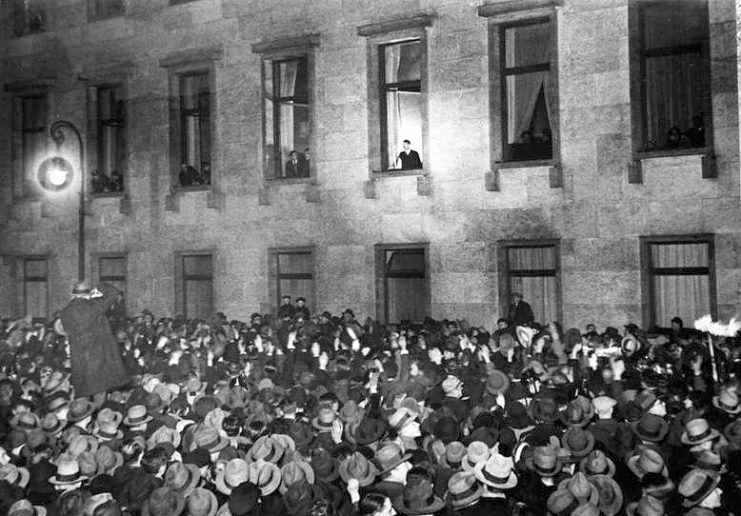
Two myths about Hitler himself also persist — one personal, one
professional. Concerning the latter, some say that Hitler won the Nazi
leadership by just one vote, but in fact, he won by a landslide. The
personal myth is that he had one testicle.
This story began to circulate at the end of the war after the Soviets
performed the autopsy on Hitler’s body following his suicide.
For years, many insisted it was true, including a medic who treated
Hitler in World War I. But there is no conclusive, documented evidence
to support this notion. Hitler,
at the window of the Reich Chancellery, receives an ovation on the
evening of his inauguration as chancellor, 30 January 1933.Photo:
Bundesarchiv, Bild 146-1972-026-11 / Sennecke, Robert / CC-BY-SA 3.0
Some myths about the war sprang from good intentions, like the one in
which British planes destroy a German aerodrome. It arose from a book, Berlin Diary, written by war correspondent, William Shirer.
His entry in 1940 claims he heard of British bombers doing this, but
the question it begs is: why? Different versions of the story surfaced,
such as German planes attacking British airstrips, but again: why? No
source for these stories has ever come forward to confirm the account in
Shirer’s book. Shirer in Compiegne, France, reporting on the signing of the armistice.
Germany was not the only country around which false narratives arose after the war. Japan had its share as well.
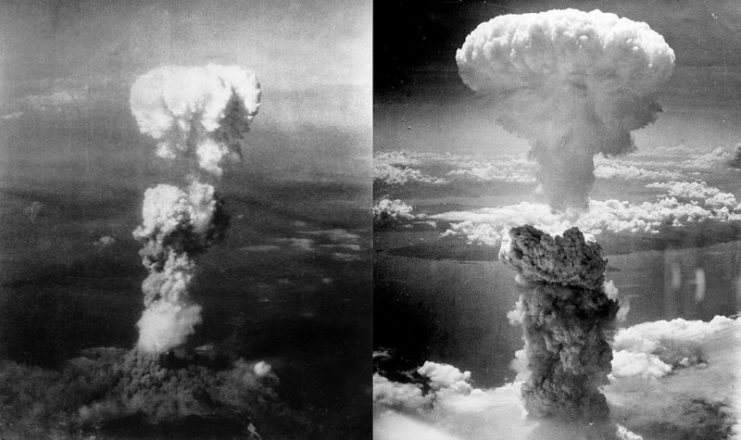
Critics of the U.S. atomic strikes against Nagasaki and Hiroshima
claim that there was no need for this drastic step because Japan was
ready to surrender. On the contrary, there is documented evidence that
demonstrates the country’s intention to combat any invasion on its soil. Atomic bomb mushroom clouds over Hiroshima (left) and Nagasaki.1945
Furthermore, evidence also suggests that it was planning an invasion
of the U.S. Japan fervently believed the U.S. could not survive another
attack like Pearl Harbour so, before the bombs fell, it was actively
planning another attack.
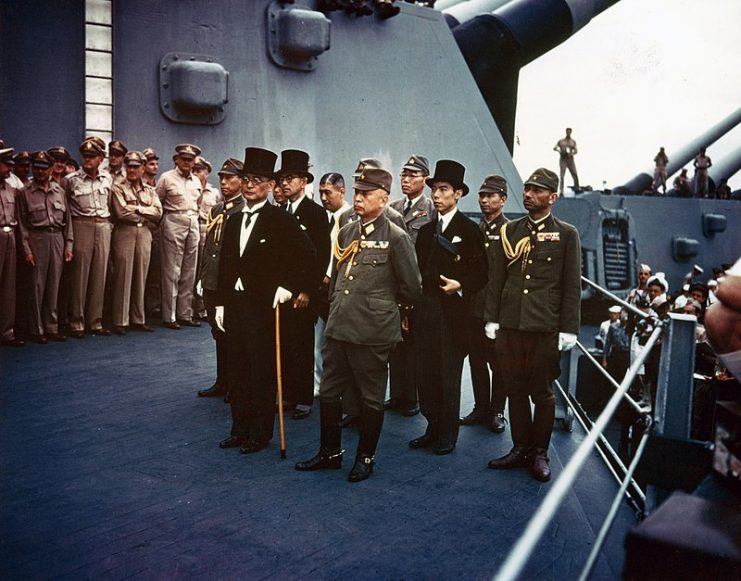
But once the two cities were virtually demolished, Japan signed surrender papers on August 15, 1945. Representatives of the Empire of Japan stand aboard USS Missouri prior to signing of the Instrument of Surrender.
Another fallacy that swirls around Japan is that one of its wartime
leaders in the Philippines, General Tomoyuki Yamashita, found and hid
millions in gold and other treasures.
No corroborating evidence was ever offered for this theory, and the
general certainly wasn’t talking during his trial for war crimes in
1945. But at least one person bought this tale: the late president of
the Philippines, Ferdinand Marcos. He invested time and resources
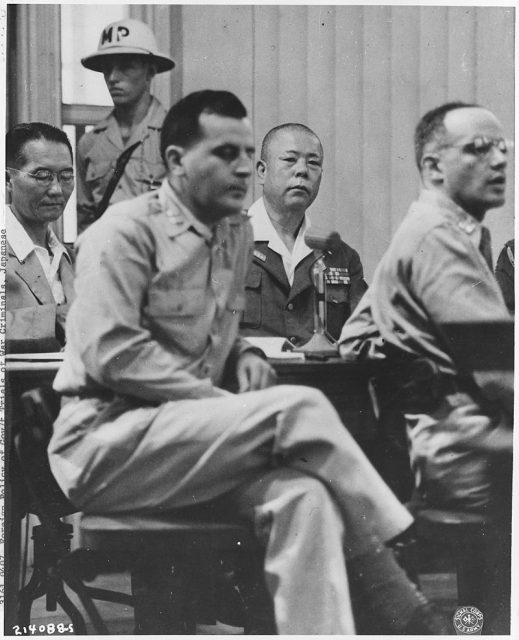
pursuing this myth, all to no avail. Yamashita (second from right) at his trial in Manila, November 1945
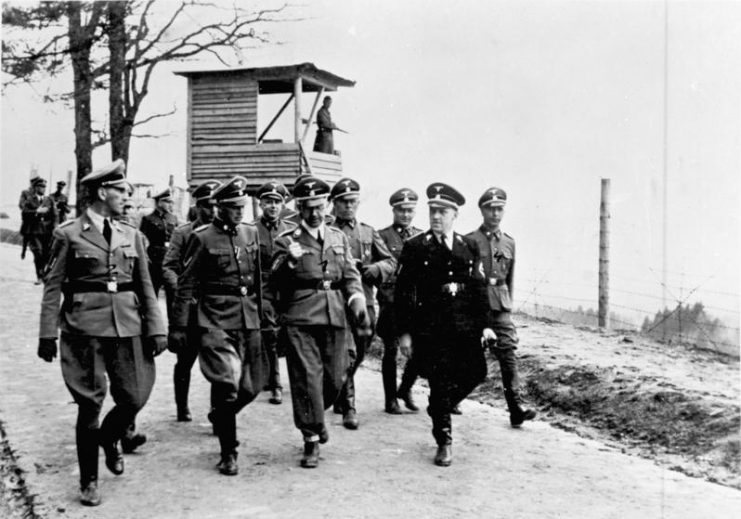
In Germany, the fiercest – and most feared – of Hitler’s troops was
the SS. Led by Heinrich Himmler, its mandate was to help create a
“master race” made up of Aryans: men of pure, German blood.
At first, Himmler stuck to his principle of recruiting only white men
with the correct racial profile. But by 1944, many of these so-called
“racially pure” men had died in battle, and Himmler needed more men. By
the war’s end, the group had members who were Spanish, French, and even
had Russian-German ancestry. Himmler,
Ernst Kaltenbrunner, and other SS officials visiting Mauthausen
concentration camp in 1941.Photo: Bundesarchiv, Bild 183-45534-0005 /
CC-BY-SA 3.0
Russia is the center of a different sad tale: that bone fields that
existed near Volgograd, then Stalingrad. Many men died on the Eastern
Front, with some estimates running into the millions. But an Austrian
journalist’s claim in the 1980s that they were all put in a mass grave
there was a pure exaggeration.
Another story about Russia includes its scientists and biologists,
who were purportedly trying to create a “master race” of their own to
combat the Aryans.
These creatures were able to conquer all their fear, go without
sleep, and serve as slaves to their Soviet masters. No doubt the
Russians did bizarre medical experiments just like their German
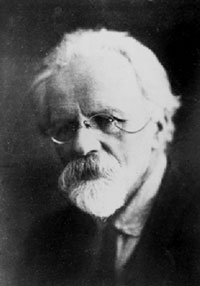
counterparts, but no race of “super slaves” ever emerged. Ilya
Ivanovich Ivanov – a Russian and Soviet biologist.He may have been
involved in controversial attempts to create a human-ape hybrid.
Other myths are innocuous, and even a little humorous. A “graveyard
of cars” in Belgium was not created by U.S. soldiers stealing German
vehicles.
The truth is blander: people abandoned cars, built in the 1960s and
1970s, at a specific locale, which was finally cleaned up in 2010. A “graveyard of cars” in Châtillon, Belgium.Photo: Tim De Waele.be CC BY-NC 2.0
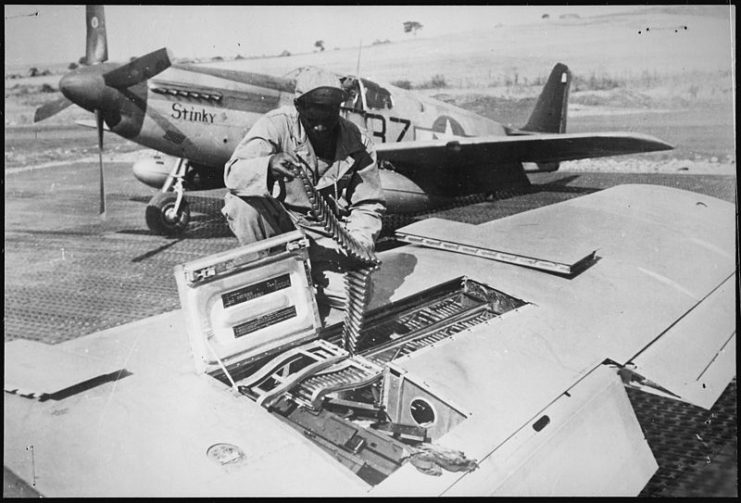
Some people claim that the expression “the whole nine yards” arose
from the measure of a machine gun’s ammunition belt. However, the term
comes from American baseball, a reference to the nine innings in a
regulation game. An armorer of the 15th U.S. Air Force checks ammunition belts of the .50 caliber machine guns in the wings of a P-51
The tale of a German submarine being forced to surrender because of a malfunctioning toilet was based on truth but exaggerated.
The toilet was not overflowing, as legend has it. The technology was
new at the time, and the sub’s captain misused it with the result that
he had to surface to avoid the leaking gas poisoning his crew. The
British Navy spotted the sub, just off the Scottish coast. A model of German Submarine U-47 viewed from the side.Photo: Rama CC BY-SA 2.0
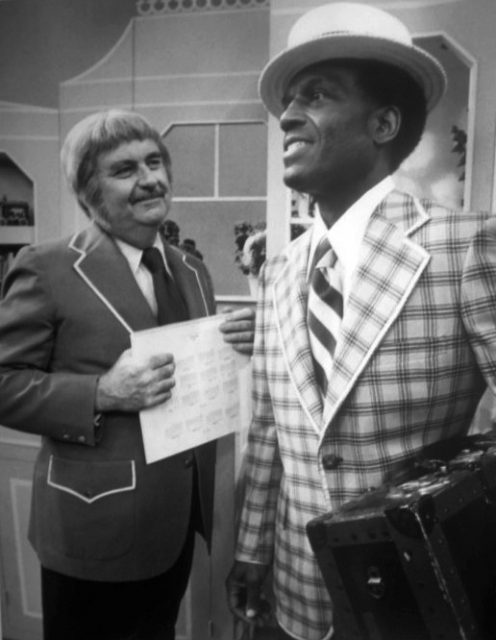
Another false story is that Lee Marvin and Bob Keeshan, also known as
Captain Kangaroo, served together at Iwo Jima. Both did indeed serve in
the U.S. Army, but at different times and in different locales.
This particular tale sounds like something manufactured by a
Hollywood studio’s P.R. department to boost morale. Why no one checked
it before it stuck is a mystery. Bob Keeshan and comedian Nipsey Russell in the Treasure House on the television program Captain Kangaroo.1976
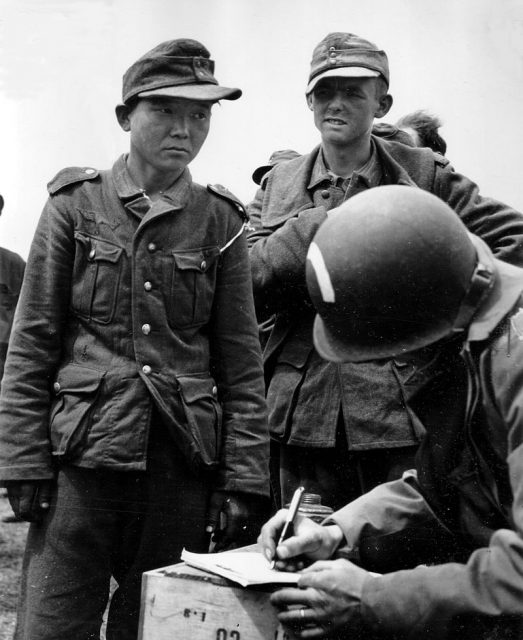
As odd as it sounds, a few Korean men did serve on the German side
during the war and were captured by U.S. troops at Omaha Beach in 1944.
These men had previously been captured by the Germans and forced into
service by them. An unidentified man in Wehrmacht attire (left) following capture by American paratroopers in June 1944 after D-Day.
These and other stories about the war continue to circulate because
society is fascinated by World War II. Despite the many true tales of
heroics and tragedy that actually occurred, we are still enthralled by
what we don’t understand.
Why learn about the horrors of lab experiments conducted by Russian
biologists when we can imagine a fictional story of a Soviet super
slave? Perhaps our willingness to buy into false narratives says more
about us as an audience than it does about the absurd stories
themselves.






No comments:
Post a Comment