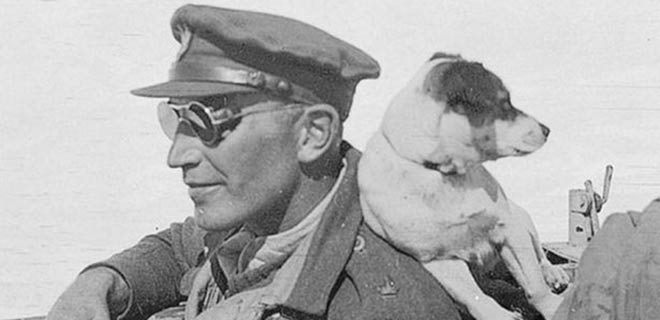
“Wild
maybe, but he was definitely someone you would want on your
side.” Colonel Robert Blair Mayne also known as ‘Paddy’ and as a
prolific destroyer of Nazis troops and machinery
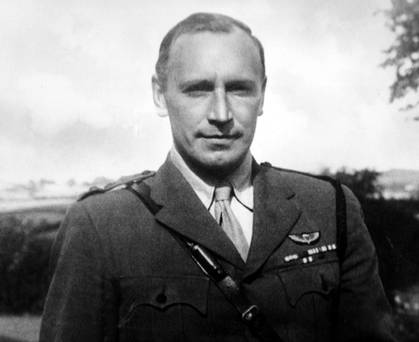
Robert Blair Mayne, known by the nickname “Paddy,” was one of the
most effective Allied soldiers during World War II. In addition to many
awards, he was distinguished by phenomenal physical power, mastery of
the knife, his exceptional skills as a shooter, and his ability to move
silently. Robert Blair “Paddy” Mayne
Mayne was merciless to his opponents, using any means he could to emerge victorious from the most difficult situations.
In addition, Mayne had the unique ability to assess the situation on
the battlefield instantly and assess his own capabilities so as not to
put his soldiers at risk. Getting into critical and often hopeless
situations, Mayne performed unimaginable and courageous actions that
influenced the outcome of battles.
He was also one of the founders of the Special Air Service (SAS).
In order to understand how Paddy Mayne managed to achieve such
results, it is necessary to pay attention to his origins and the
circumstances by which his character was formed.
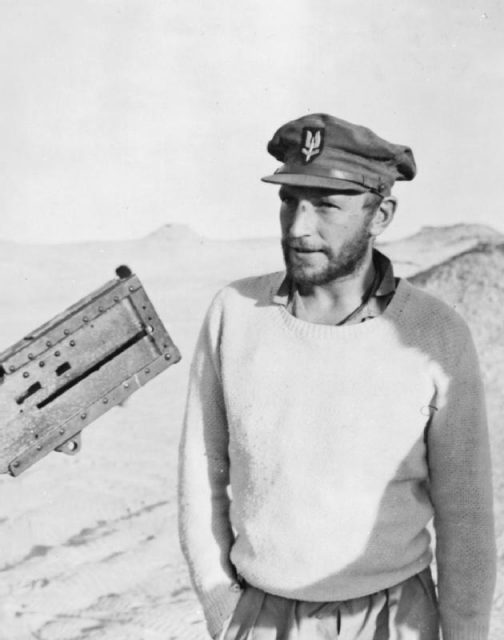
He was born on January 11, 1915, in the city of Newtownards, Northern
Ireland to a Protestant family who owned several retail businesses in
the city. Lt Col Robert Blair ‘Paddy’ Mayne, SAS, in the desert near Kabrit, 1942.
Paddy was named in honor of his mother’s cousin, Captain Robert
Mayne, an officer in the British army who died in battle during the
First World War.
While attending elementary school, Mayne became interested in playing
rugby and played for the school’s 1st XV and the local Ards RFC team.
In addition, he played golf and cricket as well as showing some skill as
a shooter at a local club.
After graduation, Mayne decided to become a lawyer and studied law at
Queen’s University Belfast. In August 1936, he became a
heavyweight-boxing champion among the Irish universities.
Mayne was also the second-line striker of the Ireland rugby team. As
part of his team, he won six games, and in 1938, he joined the British
Lions during their tour of South Africa.
However, his legal and sports careers were soon prematurely interrupted by the approaching war.
On the playing field, Mayne was a goal-oriented player. Tough sports
and the ability to compete with outstanding athletes had given him
confidence, endurance, and perseverance. He had the ability to work in a
team but also displayed leadership skills.
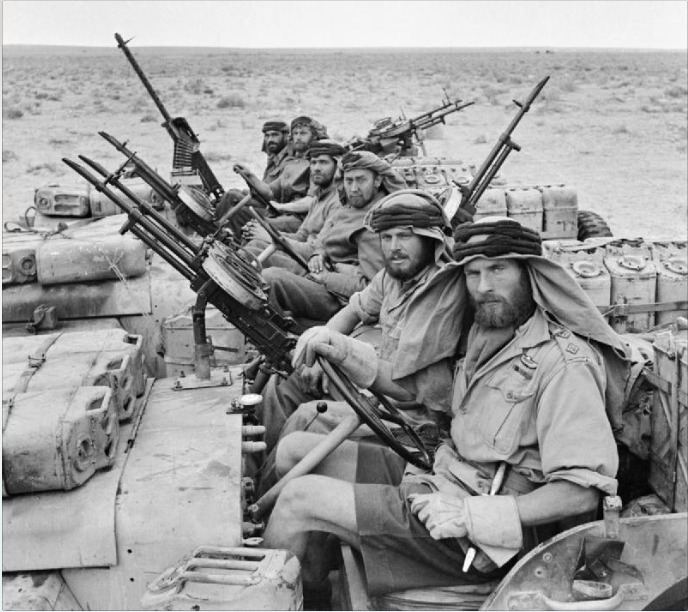
All these qualities were indispensable and came in useful to Paddy while serving in the SAS. A
heavily armed patrol of ‘L’ Detachment SAS in their Jeeps, just back
from a three-month patrol. The crews of the jeeps are all wearing
‘Arab-style’ headdress, copied from the Long Range Desert Group.
Before the beginning of the Second World War, Mayne had joined the
Supplementary Reserve in Newtownards. He moved through several regiments
and after the evacuation of Dunkirk, Mayne volunteered for the newly
formed No. 11 (Scottish) Commando.
In June 1941, acting as a junior lieutenant with No. 11 Commando, Mayne took part in a Syria–Lebanon Campaign.
He was involved with an operation on the Litani River in Lebanon
against the French troops of Vichy. Mayne played a distinct role in the
raid. For this, his name was mentioned in dispatches and his friend, Lt.
Eoin McGonigal, recommended him to Captain David Stirling.
From November 1941 to the end of 1942, Mayne took part in many night
raids in the deserts of Libya and Egypt as part of the SAS. There is a
claim that he was a pioneer in the use of military jeeps for night raids
and single-handedly managed to destroy up to 100 enemy aircraft.
During Mayne’s first successful raid at Wadi Tamet on December 14,
1941, he was awarded the Distinguished Service Order (DSO) and on
February 24, 1942, was mentioned in dispatches.
On the night of July 26, 1942, Mayne took part in one of the most
successful SAS raids in the desert along with Captain Stirling. Eighteen
armed jeeps raided the Airfield of Sidi Haneish. Managing to avoid
detection, they destroyed up to 40 German aircraft. They managed to
escape, losing two men and three jeeps.
The success of this operation saved the SAS from the dissolution that the regular army had planned.
Mayne developed a bit of a reputation for drinking. Alcohol released
all his ferocity and recklessness. He was known to repeatedly start
fights and once trashed a dining room.
When Stirling was captured in January 1943, the 1st SAS regiment was
reorganized into two separate parts: the Special Boat Section and the
Special Raiding Squadron (SRS).
Mayne became commander of the Special Raiding Squadron and led a unit
in Italy and Sicily until the end of 1943. On July 10, 1943, in Sicily,
he performed two successful operations: the first to seize batteries
during which he killed 200-300 Italians and the second to secure the
town of Augusta. For this, Mayne was awarded a bar to his DSO.
In January 1944, he was promoted to lieutenant colonel and was
appointed commander of the re-formed 1st SAS regiment. Mayne led the SAS
during the war campaigns in Belgium, Germany, Norway, the Netherlands,
and France. In operations, he often attracted resistance fighters
including French Maquis.
For his leadership, heroism, and close cooperation with the French
Resistance, Mayne was honored to receive a second bar for his DSO. The
post-war French government awarded him the Croix de Guerre and the
Legion d’honneur.
Mayne received a citation for the Victoria Cross but was turned down.
The question of why this happened not only arose in the minds of his
contemporaries at the time, but was also raised in the British
Parliament in January 2006. In spite of a public campaign to reopen the
case, the British government refused to award him the Victoria Cross
retroactively.
Paddy Mayne was a man who would refuse to obey the orders of his
superiors and who violated many articles of the military charter.
However, during the war, he used his best qualities of perseverance
and effectiveness to defend the interests of his country and the SAS.




No comments:
Post a Comment