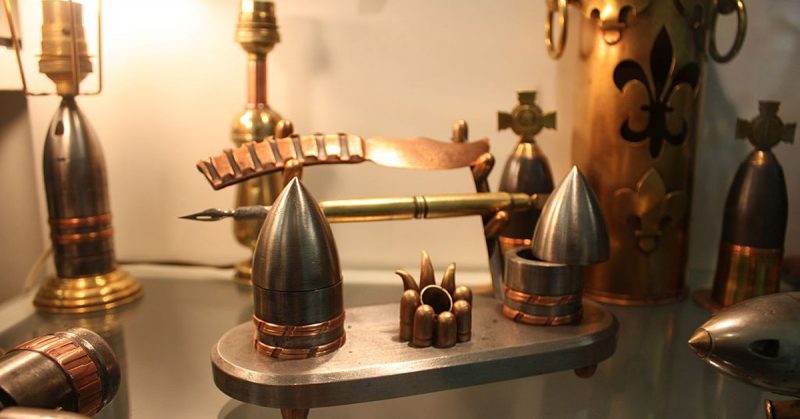
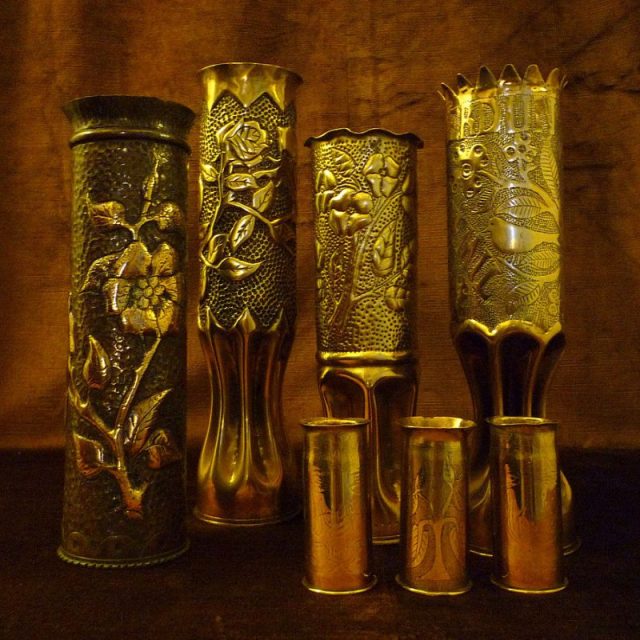
Trench art: Collection of Leveau Fort. Photo: Chatsam / CC BY-SA 3.0
Ostensibly, artillery shells were supposed to be
recycled, but their use as an artistic material kept their reuse for war
efforts minimal.
The scale of the Great War flabbergasted many when the true scope of
the conflict revealed itself to the belligerents. Across Europe, the Old
World powers mustered their populations for war in numbers never before
conceived by man.
What the leaders hoped would be a quick skirmish dragged on into a
long, brutal conflict that shook the world. Entire generations of men
fought as whole neighborhoods succumbed to poison gas, machine guns, and
senseless forays into No Man’s Land.
As the assembled forces of Europe dug in for what proved to be a
devastating and brutally long conflict, they found themselves facing one
of the truest adages of war. Namely, long stretches of boredom
punctuated by moments of sheer terror.
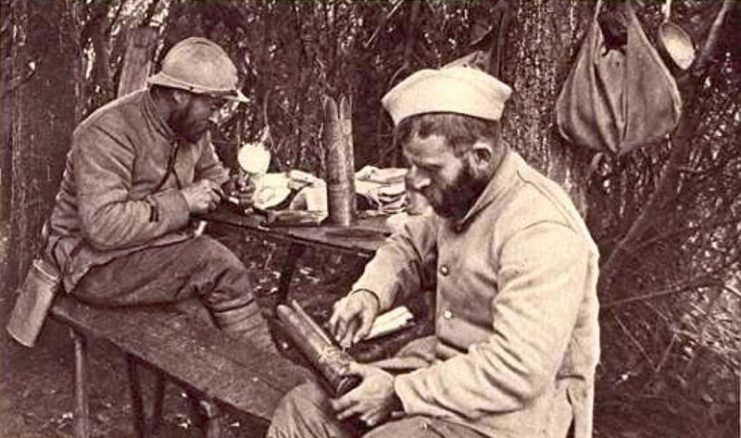
Hunkered down in bunkers and trenches as the war dragged on, soldiers came up with various ways to occupy themselves. Trench Crafts at Work 1914-18When
not ducking from artillery, going over the top, or killing rats,
soldiers whiled away the time making things. With a variety of handy
supplies available, soldiers would usually work on spent shell casings
and old helmets, turning these materials into various pieces of art of
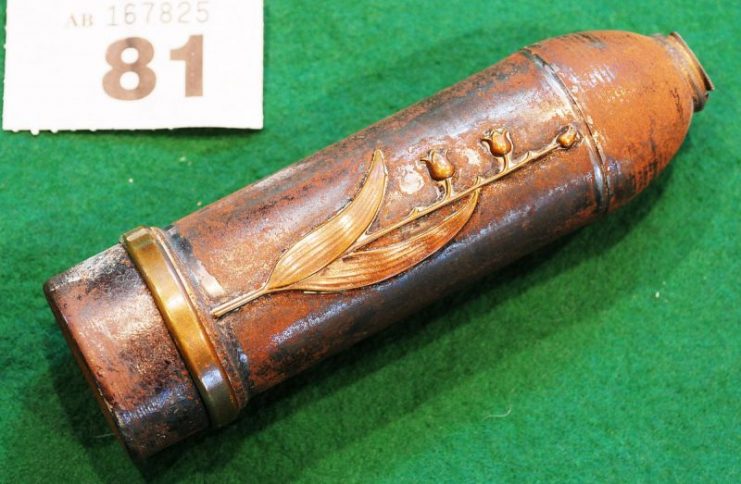
varying quality and design. Cannon shell converted to use as a vase.Bullets
became crosses and letter openers. Shell cases could become ashtrays,
sculptures, and vases, which tended to be the most common. Ostensibly,
artillery shells were supposed to be recycled, but their use as an
artistic material kept their reuse for war efforts minimal. Trench
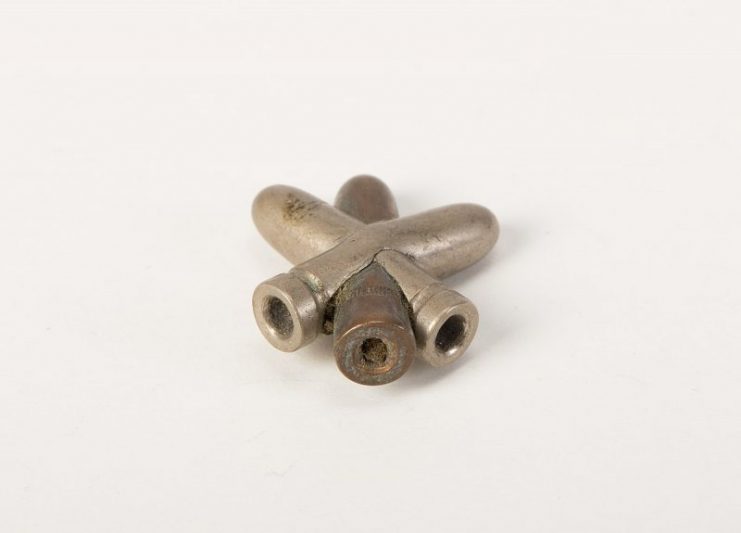
art (ornament) of three crossed bullets (WW1) three crossed bullets,
possibly part of a larger object. Photo: Auckland Museum / CC BY 4.0Depending
on the theater of war, civilians also made trench art. Though varying
wildly in quality, some pieces could be very intricate and beautiful
works of art. Some civilians utilized their artistic talents to sell
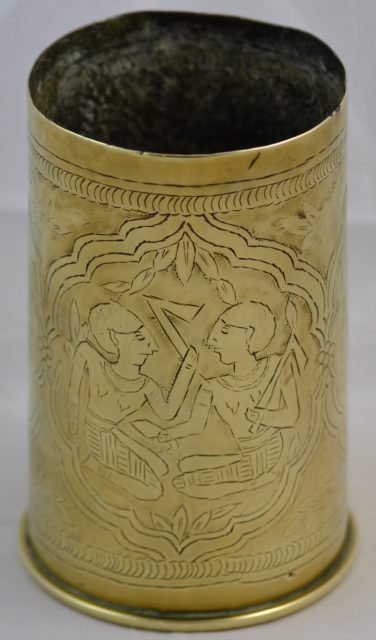
trench art as souvenirs. German
shell case engraved with Egyptian figures obtained as a souvenir by
Private Charles Horne who initially served in the Irish Fusiliers and
later transferred to the Jewish Legion, the 38th Battalion of the Royal
Fusiliers.Such forms of trench art would carry
on into several wars, as people worked to scrape a living however they
could in war-torn lands. Scavenging battlefields for materials formed
another way for those in war-torn lands could scrape a living amongst
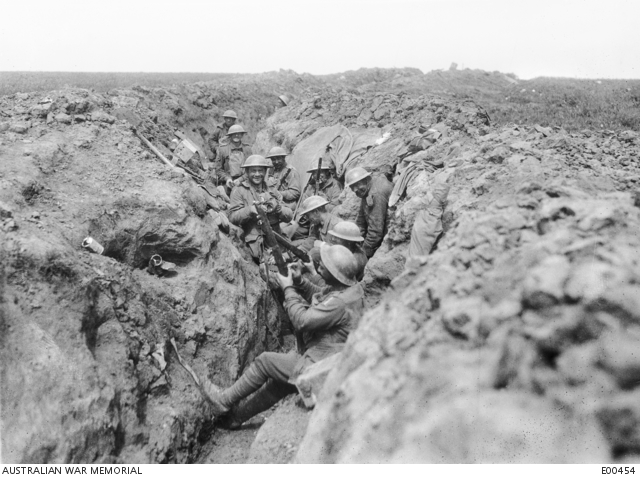
the ruins. Australians
in the second line of the trenches before Riencourt (near Bullecourt),
in May 1917, cleaning their rifles in readiness for an attack.During
the Great War, however, the soldiers in the trenches produced the bulk
of the trench art, thus defining the term. Such works often consisted of
roughly shaped, cut, or formed sculptures or trinkets.
Some pieces of trench art, however, could become truly beautiful
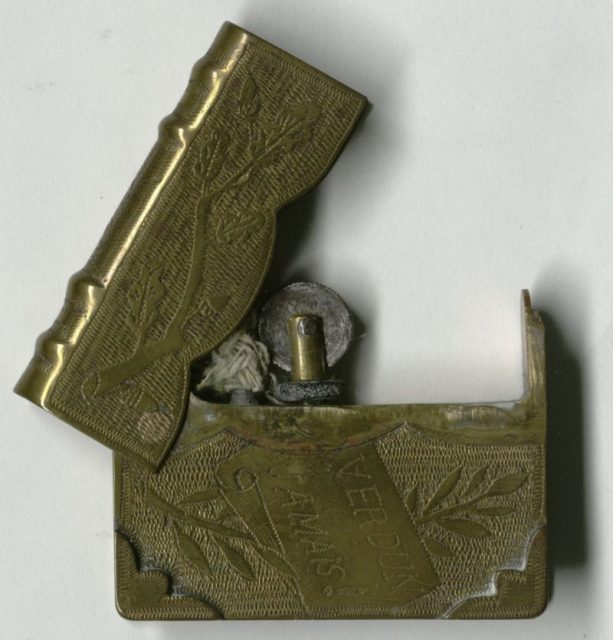
pieces, their origin all the more tragic due to their source material. Objects of unknown origin made during the Great War in German trenches or prison camps.Carefully
engraved tobacco jars, cleverly cobbled lighters, elegantly forged
rings, even drinking mugs as decoratively functional as the tankards of
warriors of old came to life under the bored and dedicated hands of
soldiers across the trenches. Art from the trenches. Photo: Thomas Quine – CC BY-SA 3.0Whether
decorative or functional, crude or gorgeous, simple or intricate,
trench art told a story of boredom, creativity, and, above all,
humanity.
Stuck in a war of empires with nothing to do but to wait for their
chance to get hurled into yet another seemingly meaningless battle,
soldiers desperately grasped at anything to take their minds off the war
raging around them. Trench crafts. Photo: Claude TRUONG-NGOC / CC BY-SA 3.0The
opportunity to create something when forced into an event as
destructive as war no doubt proved therapeutic. Turning bullets into
crosses and shells into drinking mugs made the tools of war less lethal
in their minds.
In a war that defined the term “shell shock,” the ability for
soldiers to lessen the horrors about them allowed them to retain some of
their sanity and humanity. Weapons meant to kill and maim their fellow
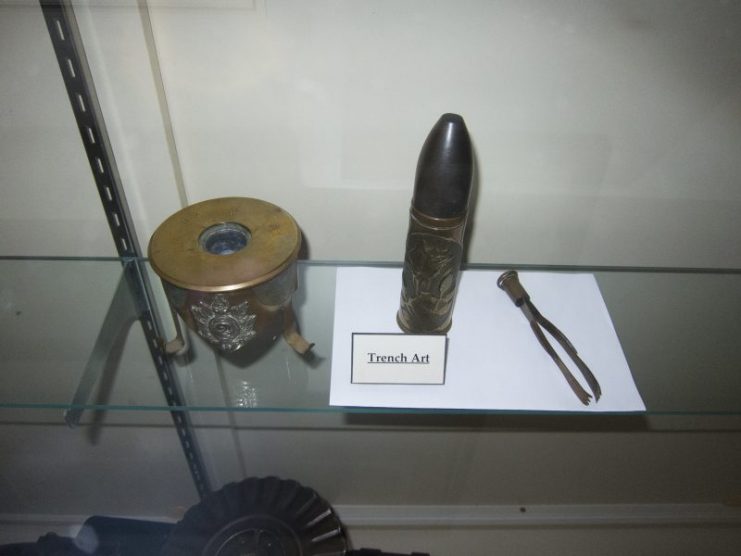
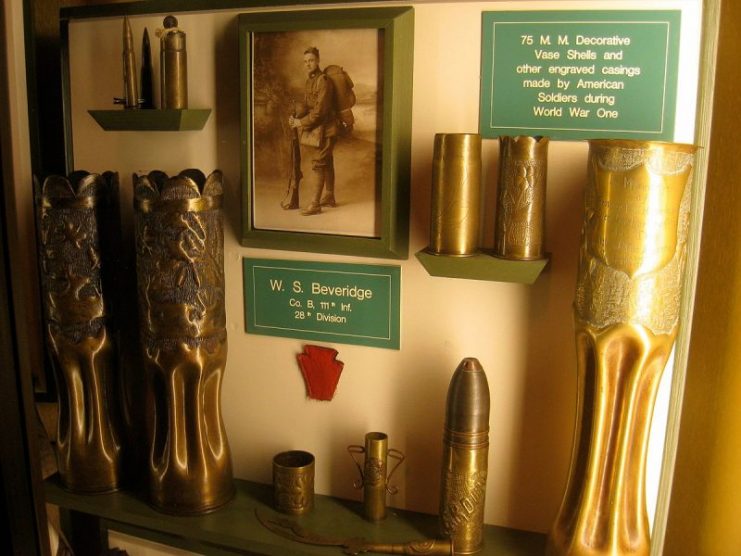
men were reshaped into works of art to render them unusable in combat. Trench art at Soldiers and Sailors National Military Museum and Memorial
Decades later, this trench art remains to remind of us of the
sacrifice, both in body, mind, and spirit of the men who created it. The
soldiers themselves often took the artwork home, to remind them of
their service and, hopefully, ease the transition back into civilian
life.




No comments:
Post a Comment